
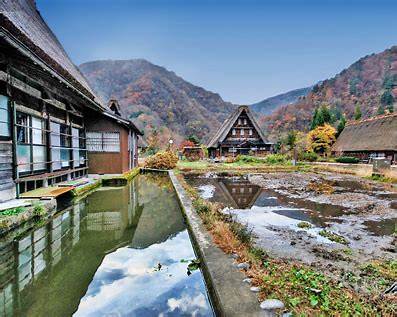
Japan is often associated with neon-lit cities, bullet trains, and cutting-edge technology. However, beyond the urban skyline lies a quieter, more soulful side of the country—its villages. These villages preserve Japan’s cultural roots, offering travelers a chance to experience traditional architecture, slow living, and breathtaking natural landscapes. If you’re looking to explore Japan beyond the usual tourist trail, these villages are truly unforgettable.
Here are the top 10 villages to visit in Japan, each offering a unique glimpse into the country’s heritage.
1. Shirakawa-go (Gifu Prefecture)
Shirakawa-go is one of Japan’s most iconic villages and a UNESCO World Heritage Site. Famous for its traditional gassho-zukuri farmhouses, the village feels like stepping into a living museum. These steep-roofed houses were designed to withstand heavy snowfall and are over 250 years old.
In winter, Shirakawa-go transforms into a magical snow-covered wonderland. In summer, lush greenery surrounds the village, making it equally enchanting.
2. Gokayama (Toyama Prefecture)
Less crowded than Shirakawa-go, Gokayama offers a more peaceful and authentic rural experience. Villages like Ainokura and Suganuma showcase well-preserved gassho-style houses set against forested mountains.
Gokayama is ideal for travelers seeking serenity, cultural immersion, and a slower pace of life. It is also known for traditional paper-making and folk music.
3. Ouchi-juku (Fukushima Prefecture)
Ouchi-juku is a beautifully preserved post town from the Edo period. Thatched-roof houses line a single main street, creating a strikingly uniform and historic atmosphere.
The village is famous for its traditional soba noodles, often eaten using a long green onion instead of chopsticks. Visiting Ouchi-juku feels like walking through a historical painting.
4. Ine (Kyoto Prefecture)
Located along the Sea of Japan, Ine is a charming fishing village known for its funaya—traditional boat houses built directly on the water. The first floor is used for boats, while families live above.
Ine offers a rare opportunity to experience coastal village life in Japan. The calm sea, wooden houses, and slow rhythm make it one of the most unique villages in the country.
5. Tsumago (Nagano Prefecture)
Tsumago is a perfectly preserved post town along the historic Nakasendo Trail, which once connected Kyoto and Tokyo. Cars are restricted during daytime to maintain its traditional atmosphere.
Wooden inns, lantern-lit streets, and mountain surroundings make Tsumago an ideal destination for history lovers and hikers alike.
6. Magome (Gifu Prefecture)
Located near Tsumago, Magome is another beautifully restored post town on the Nakasendo Trail. The village sits on a hillside, offering stunning views of the surrounding mountains.
Magome is well known for its stone-paved streets, traditional tea houses, and literary heritage. Walking between Magome and Tsumago is one of Japan’s most scenic hikes.
7. Hida Furukawa (Gifu Prefecture)
Often overshadowed by nearby Takayama, Hida Furukawa is a peaceful town known for its canals, white-walled storehouses, and traditional carp-filled waterways.
The village retains a strong local charm and is famous for its seasonal festivals and wooden craftsmanship. It’s an excellent destination for travelers looking for authenticity without crowds.
8. Miyama (Kyoto Prefecture)
Located in the mountains north of Kyoto, Miyama is known for its traditional thatched-roof houses surrounded by nature. The village offers a deep connection to rural Japanese life.
Visitors can explore local farmhouses, enjoy fresh countryside cuisine, and experience seasonal beauty—from cherry blossoms to autumn foliage.
9. Sannai-Maruyama (Aomori Prefecture)
Sannai-Maruyama is a reconstructed prehistoric village dating back over 4,000 years. Unlike other villages on this list, it offers insight into Japan’s ancient Jomon culture.
The site features reconstructed homes, watchtowers, and artifacts, making it a fascinating destination for history enthusiasts and curious travelers.
10. Kayabuki no Sato (Kyoto Prefecture)
Kayabuki no Sato is a small village famous for its well-preserved thatched-roof farmhouses. The village looks especially stunning in winter when snow blankets the roofs.
This village represents traditional rural Japan at its finest and is perfect for travelers seeking calm, culture, and scenic beauty.
Why Visit Japan’s Villages?
Japan’s villages offer something that cities cannot—a connection to the past. They allow travelers to slow down, appreciate craftsmanship, and experience traditions that have survived for centuries.
Whether it’s walking along historic trails, staying in traditional inns, or enjoying local cuisine, village travel in Japan is deeply enriching.
Conclusion
Exploring Japan’s villages reveals a side of the country that is often overlooked but deeply rewarding. From snow-covered farmhouses to coastal fishing communities, these villages showcase Japan’s cultural richness and natural beauty.
If you want to experience authentic Japan, these villages are not just destinations—they are stories waiting to be lived.
